
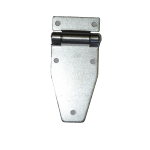
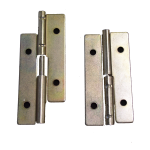
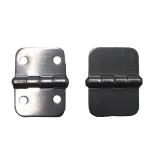

A piano hinge is one of the simplest pieces of hardware on a truck body, trailer or canopy, and one of the hardest working. Instead of two or three separate hinges carrying a door at a few points, a piano hinge runs the full length of the joint and spreads the load evenly along it. That makes it the go-to choice for toolbox lids, drop-down flaps, service-body hatches, fold-down panels and long, narrow doors that would twist or sag on ordinary hinges. This guide explains how piano hinges work, the materials and sizes to look for, where they make sense on South African vehicles and trailers, and how to fit one so it lasts.
Hinge Master Sales is based in Sebenza, Edenvale (Gauteng) and has traded as a (Pty) Ltd since 1994, supplying body components and hardware to the canopy, bus, container, trailer and truck body-building industries across South Africa, across the border and overseas.
What is a piano hinge?
A piano hinge, also called a continuous hinge, is a long hinge made of two leaves joined by a pin that runs through interlocking knuckles along the full length. The name comes from piano lids, which use this style of hinge to carry a long, heavy lid without sagging. You can read more about the history and design on Wikipedia’s piano hinge entry.
On commercial vehicles, the same idea solves a practical problem. Every hinge knuckle shares the work, so no single fixing point takes all the strain when a lid is slammed, a flap is loaded or the vehicle bounces over corrugations. The result is a door that stays straight, closes in line and seals properly.
Piano hinge vs separate hinges
Separate hinges, such as heavy duty butt, bullet and butterfly hinges, are the right choice for big, heavy doors where strength is concentrated at a few strong pivots. A piano hinge wins when the door is long relative to its height, or when the panel itself is thin and needs support along its edge.
| Feature | Piano (continuous) hinge | Separate hinges |
|---|---|---|
| Load spread | Along the full length of the joint | Concentrated at two or three points |
| Best for | Lids, flaps, hatches, long narrow doors, thin panels | Heavy doors, gates and drop sides |
| Sag and twist | Very little, because the edge is supported throughout | Possible on long or thin doors |
| Dust and water | The continuous joint leaves fewer gaps | Gaps between hinges |
| Fitting | Many fixings along the length; can be cut to size | Fewer fixings, quicker to fit |
| Replacement | Usually replaced as a complete length | Individual hinges can be swapped |
Where piano hinges are used on vehicles and trailers
- Toolboxes and under-body boxes: lids that are opened many times a day on bakkies, trucks and service vehicles.
- Service bodies and canopies: lift-up hatches and side flaps, often paired with gas stays to hold them open.
- Trailers: fold-down tailgates on light trailers, lids on enclosed trailers and storage compartments.
- Van and truck bodies: inspection hatches, small access doors and fold-down shelves.
- Buses and specialised bodies: luggage and equipment compartment flaps.
Piano hinge materials: mild steel or stainless steel?
The material you choose should match the frame, the finish and where the vehicle works.
Mild steel piano hinges
Mild steel is strong, affordable and easy to weld, which makes it a good match for steel toolboxes, trailer bodies and frames that will be painted or galvanised after fabrication. Unprotected mild steel will rust, so plan for a protective coating and keep the knuckles lubricated.
Stainless steel piano hinges
A stainless piano hinge is the choice where corrosion resistance and appearance matter: coastal fleets, vehicles that are washed often, refrigerated and food bodies, and anything that must look neat for years. If you fit a stainless hinge to an aluminium panel, isolate the two metals in wet or salty conditions. The guide Stainless Steel in Contact with Other Metallic Materials explains why galvanic corrosion happens and how to prevent it.
Flexible PVC continuous hinges
For light flaps and covers, a flexible PVC hinge does the same job with no metal at all. It won’t rust and it runs quietly, but it isn’t designed for heavy doors. Our canopy hinge guide covers PVC centre hinges and other canopy options in more detail.
How to choose the right piano hinge
1. Length
Measure the full length of the joint. A piano hinge is normally cut to length, so allow a little extra and cut it to finish just short of each end of the door so it doesn’t snag.
2. Open width
The open width is the total width of both leaves when the hinge is laid flat. Wider leaves give more room for fixings and more support, but they must fit the frame and door without overhanging.
3. Material thickness
Thicker leaves and a heavier pin carry more weight and stand up better to abuse. For toolbox lids that people lean on, or tailgates that carry load, step up in thickness rather than down.
4. Material and finish
Choose mild steel for welded and painted steel work, and stainless steel for corrosion resistance and a clean finish. Keep the finish consistent across the vehicle so it looks factory-built.
5. Fixing method
Piano hinges can be welded, bolted, riveted or screwed, depending on the material. Welding suits mild steel frames, while bolts or rivets suit aluminium and stainless assemblies. Use enough fixings along the length to let the hinge do its job.
6. Opening angle and clearance
Check how far the lid or flap must open and whether anything will foul it. If a hatch must stay open on its own, plan for a stay or gas strut at the same time.
Fitting a piano hinge: practical tips
- Support the panel and line it up with the frame before you mark anything.
- Cut the hinge to length and deburr the cut ends so they don’t catch hands or seals.
- Clamp and mark the hinge on both the door and the frame, keeping the pin parallel to the edge.
- Fix the ends first, then check that the door opens and closes freely before you add the fixings in between.
- Isolate dissimilar metals with suitable washers or tape where stainless meets aluminium.
- Seal the fixing holes to keep water out, and check that the door seal compresses evenly. Our door seal rubber selection guide will help if the seal needs replacing too.
Looking after a piano hinge
- Rinse off dust, mud and road salt regularly, especially after gravel roads or coastal trips.
- Lubricate the knuckles lightly a few times a year so the pin doesn’t seize or wear.
- Look for cracked leaves, loose fixings and a bent pin. A damaged piano hinge is usually replaced as a complete length.
- Don’t let lids slam or fly open against their stops. A stay takes that shock off the hinge.
Buying a piano hinge in South Africa
Hinge Master Sales stocks piano hinges in mild steel and stainless steel in various sizes, as part of our van door hinges range. Because sizes vary, add the piano hinge to your Enquiry Cart and tell us the length, width and material you need, or send a photo of the hinge you’re replacing. We’ll confirm what’s available and quote you.
Frequently asked questions
What is the difference between a piano hinge and a continuous hinge?
They are the same thing. “Piano hinge” is the traditional name, and “continuous hinge” describes how it runs along the full length of the joint.
Can a piano hinge be cut to size?
Yes. Piano hinges are usually cut to length to suit the door. Deburr the cut ends and make sure the pin is still secure at both ends.
Is a stainless steel piano hinge better than mild steel?
Stainless steel resists corrosion and looks neat without painting, so it suits coastal, food and frequently washed vehicles. Mild steel is easier to weld and works well on painted or galvanised steel bodies.
Can a piano hinge carry a heavy door?
A piano hinge spreads load very well, but the leaf thickness, pin size and fixings must suit the weight. For large, heavy doors and gates, heavy duty separate hinges are often the better choice.
Can I weld a piano hinge?
Mild steel piano hinges can be welded to steel frames. Tack-weld in short runs to avoid distortion, and keep weld spatter out of the knuckles so the hinge still moves freely.
Do you deliver piano hinges outside Gauteng?
Yes. Hinge Master Sales is based in Sebenza, Edenvale and delivers across South Africa and exports. Contact the team to confirm sizes, stock and delivery.
Get the right piano hinge for your build
Tell us the length, width and material you need and we’ll help you match the right piano hinge. Add it to your Enquiry Cart, contact Hinge Master Sales, call 011 452 2864 or email [email protected]. You’re also welcome to visit us at 18 Buwbes Road, Sebenza, Edenvale.
Recent Comments