
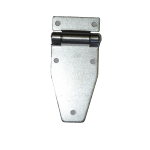
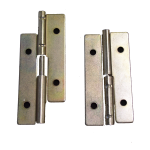
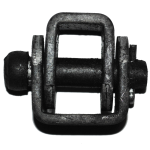
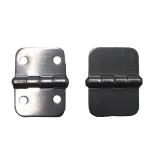
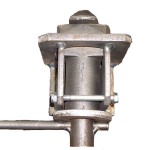
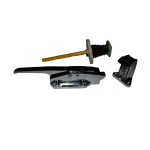
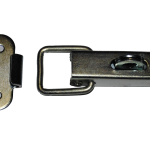
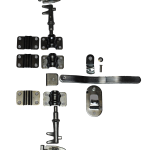

A trailer door is slammed in a hurry, shaken on gravel roads and left out in the rain and dust. When a hinge starts to sag or seize, the door drops, the lock stops lining up and the seals no longer keep water out. Choosing the right trailer door hinges from the start saves you that headache.
This guide is for trailer builders, body shops, fleet workshops and owners replacing hinges themselves. It covers which hinge type suits which door, steel or aluminium, weld-on or bolt-on, finishes, how to measure an old hinge and how many hinges a door needs. If you want an overview of every hinge we stock, start with our guide to hinge types for truck bodies, trailers and canopies.
Start with the door, not the hinge
Before you look at a catalogue, answer four questions about the door itself:
- What is the trailer body made of? Steel frames, aluminium panels and composite or plywood sides all take different hinges and fixings.
- How heavy is the door or lid, and how big? A small tool box lid and a full-height rear door on an enclosed trailer are very different jobs.
- How will it be fixed? Can you weld on the trailer, or does the hinge have to be bolted or riveted?
- Where will the trailer work? Coastal towns, farms, mines and gravel roads are much harder on hinges than a garage in town.
Butt, bullet or piano: which trailer hinge type?
Most trailer doors and lids in South Africa use one of three hinge families. Each one has a place.
Butt hinges
A butt hinge has two flat leaves joined by a pin. It is the most familiar hinge type and suits side doors, hatches and lids on light and medium trailers, especially where the hinge is bolted, riveted or screwed on. Butt hinges come in aluminium, mild steel and stainless steel, and some versions have bearings for a smoother swing under load.
Our small trailer hinges range includes several butt hinges, for example the Butt Hinge – Sinkless Alu 100×44, the Butt Hinge – Alu 100 x 75 (H091) and stainless steel 100mm butt hinges with bearings, along with the VP200 fixed and VP300 slide-on butt hinges.
Bullet hinges (weld-on)
A bullet hinge is a round, barrel-shaped hinge in two halves, one welded to the frame and one to the door. Because it is welded along its body, it is very strong and hard to tamper with. Bullet hinges are the usual choice for steel trailer doors, tailgates, ramp doors and heavier hatches on steel frames.
They are listed by size in the name, from the compact Bullet Hinge M10x50 up to the Bullet Hinge M30x120. Some sizes are also available with a grease nipple, such as the Bullet Hinge M20x100 with GR/NIPP. Our heavy duty hinges guide explains in more detail when a weld-on hinge is the better option.
Piano (continuous) hinges
A piano hinge runs along the full edge of the door or lid. It spreads the load along its whole length, which keeps long, thin lids and panels from twisting and helps a seal close evenly. On trailers it is common on tool box lids, side lockers, long drop-down flaps and lightweight doors. You can read about lengths, materials and fixing in our piano hinge guide.
Other trailer hinges worth knowing
The range also carries straight hinges with grease nipples (80×80 and 80×50), parliament hinges that let a door swing well clear of the opening, loose leaf (lift-off) hinges, double action stainless hinges and a steel butterfly hinge with a brass pin.
Quick comparison for trailer doors
| Hinge type | Usually fixed by | Best suited to |
|---|---|---|
| Butt hinge | Bolts, rivets or screws | Light to medium side doors, hatches and lids |
| Bullet hinge | Welding | Steel doors, tailgates, ramps and heavier hatches |
| Piano hinge | Rivets, screws or welding | Long lids, lockers and panels that need even support |
| Lift-off or parliament hinge | Bolts or welding | Doors that must come off or open wide |
Steel or aluminium hinges?
Match the hinge to the trailer body wherever you can.
- Steel trailers: steel bullet and butt hinges can be welded straight onto the frame, then painted or coated with the rest of the trailer. This is the strongest option for heavy doors.
- Aluminium trailers and panels: aluminium butt hinges are light, do not rust, and are bolted or riveted on. You cannot weld a steel hinge to an aluminium body, so plan bolt-on hinges from the start.
- Mixed materials: when steel or stainless parts touch aluminium, moisture can cause corrosion where the metals meet. Use suitable fasteners and keep water from sitting in the joint.
Weld-on or bolt-on?
Weld-on hinges such as bullet hinges are very strong and difficult to remove from the outside, which helps with security. The trade-off is that replacing one means cutting, re-welding and repairing the coating.
Bolt-on and rivet-on hinges are quicker to replace and suit aluminium and composite bodies. Add backing plates on thin panels so the hinge does not pull through, and check the bolts after the first few trips.
Stainless, galvanised or painted mild steel?
The finish matters as much as the hinge type, because a seized or rusted hinge is the most common reason a trailer door starts to sag.
- Painted or plain mild steel: strong and good value, and ideal for welding. It relies on paint or coating for protection, so touch up chips and weld areas.
- Galvanised steel: a zinc coating gives better rust resistance than paint alone and suits outdoor fleets. Grinding or welding removes the zinc in that spot, so treat it afterwards.
- Stainless steel: resists corrosion right through the metal, which makes it worth the extra cost at the coast, on food or refrigerated trailers, and where trailers are washed often. Our stainless steel hinges guide compares the options in detail.
Why grease nipples matter
A hinge with a grease nipple lets you push fresh grease onto the pin without taking the hinge apart. On heavy doors and on trailers that work in dust, mud or rain, this keeps the pin turning freely and slows down wear, which means less sag and fewer seized hinges. If your trailer works hard, choose a version with a grease nipple and add greasing to your regular service.
How many hinges does a trailer door need?
There is no single rule, because it depends on the door’s height, weight and how it is used. As a practical guide:
- Small lids and light hatches usually need two hinges.
- Taller or heavier doors are better with three, one near the top, one near the bottom and one in the middle, to stop the door twisting.
- Long, thin lids and lockers are often better on a piano hinge than on several separate hinges.
Place hinges close to the top and bottom edges of a door to resist sagging, and keep them in a straight line so the pins share the load evenly.
How to measure a trailer hinge for replacement
If you are replacing a worn hinge, measuring it properly avoids a second trip. Note:
- The hinge type: butt, bullet, piano, lift-off or another type.
- Leaf length and open width for butt and piano hinges, measured with the hinge laid flat.
- Diameter and overall length for bullet hinges.
- Leaf thickness and pin size.
- Hole positions, or whether the hinge is welded.
- Material and finish: aluminium, mild steel, galvanised or stainless.
- Quantity, including spares for the fleet.
A clear photo of the old hinge next to a tape measure, sent with your enquiry, helps our sales team match it quickly.
Get a quote on trailer door hinges
Hinge Master Sales has supplied hardware to the body building trade from Sebenza, Edenvale, since 1986, and we deliver nationwide across South Africa and export further afield. We do not sell through an online checkout. Instead, every order is quoted for your exact parts and quantities.
To get a price, browse the range, click “Add to Enquiry” on each part and send your list through the Enquiry Cart. You can also call our sales team on 011 452 2864 during trading hours.
Frequently asked questions about trailer door hinges
What type of hinge is best for a trailer door?
For steel trailer doors, weld-on bullet hinges are the usual choice because they are strong and hard to tamper with. For aluminium or composite doors and lids, bolt-on butt hinges or a piano hinge are more suitable. The right choice depends on the door weight, body material and how the hinge will be fixed.
Can I weld a hinge onto an aluminium trailer?
Not a steel hinge. Steel cannot be welded to aluminium, so aluminium trailer bodies normally use aluminium butt hinges or piano hinges that are bolted or riveted on.
How many hinges should a trailer door have?
Small lids and light hatches usually need two hinges. Taller or heavier doors are better with three, one near the top, one near the bottom and one in the middle. Long, thin lids are often better on a single piano hinge.
Are stainless steel trailer hinges worth the extra cost?
They are worth it at the coast, on food or refrigerated trailers and on trailers that are washed often, because stainless steel resists corrosion right through the metal. For general use, galvanised or painted mild steel hinges are a cost-effective option.
How do I get a price on trailer hinges from Hinge Master?
We work on quotes rather than an online checkout. Add the hinges you need to the Enquiry Cart and send it, or call 011 452 2864, and our sales team will quote on your exact parts and quantities, with nationwide delivery.
Recent Comments